Show Notes: Why 90% of Startups Fail (And How to Fix the Ecosystem)

Show Notes: Why 90% of Startups Fail (And How to Fix the Ecosystem)
Date: February 10, 2026
Duration: 52 minutes
Recording: Available on YouTube
About This Webinar
Serial entrepreneur Gregory Shepard breaks down why 90% of startups fail, and it's not what you think. After 12 successful exits and a five-year research project involving 2,200 founder interviews and $500,000 invested, Greg reveals the real problem: a fragmented ecosystem that prevents founders from getting coordinated support.
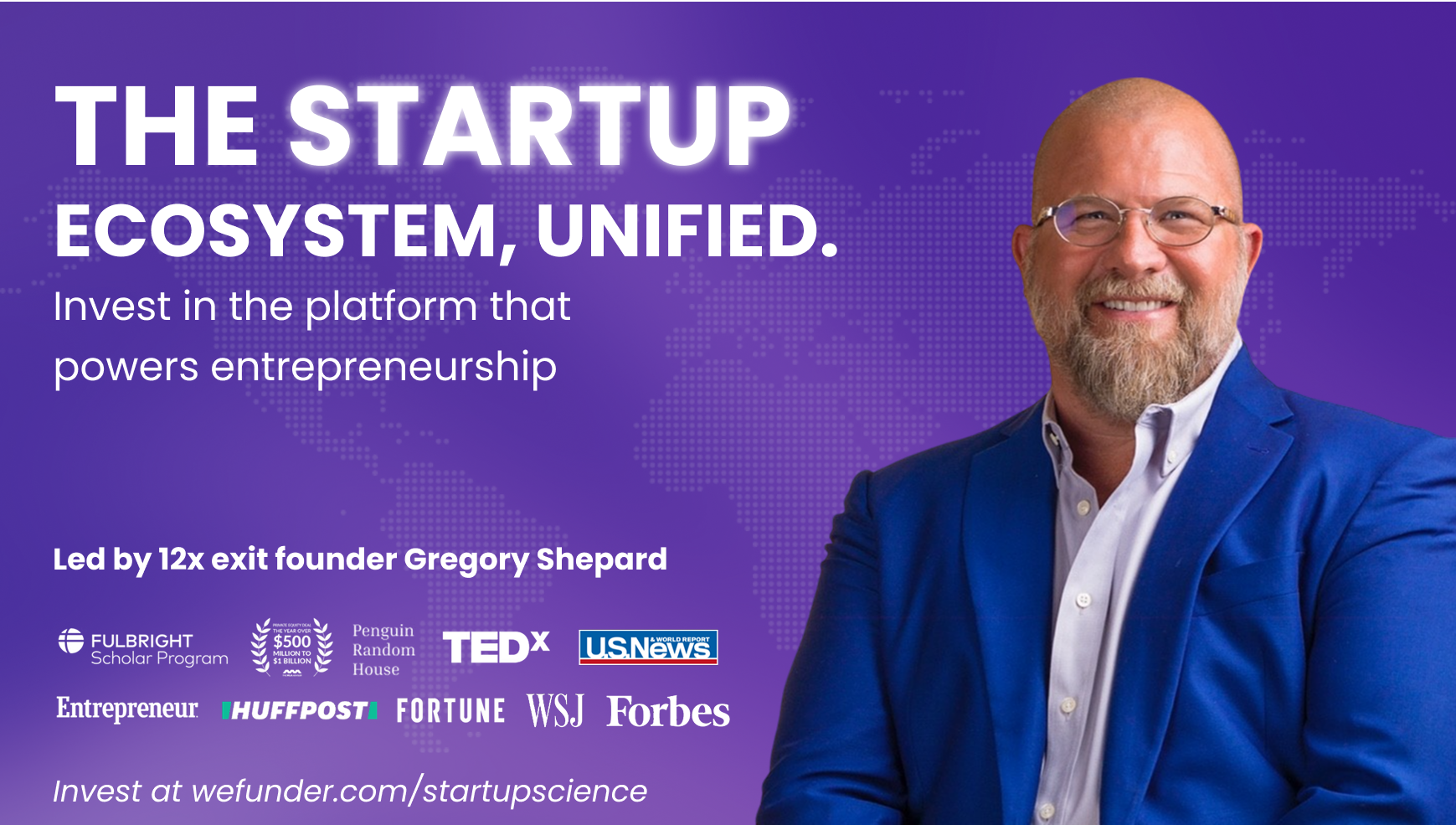
This webinar is part of Startup Science's community funding campaign. Learn more at wefunder.com/startupscience.
Speakers
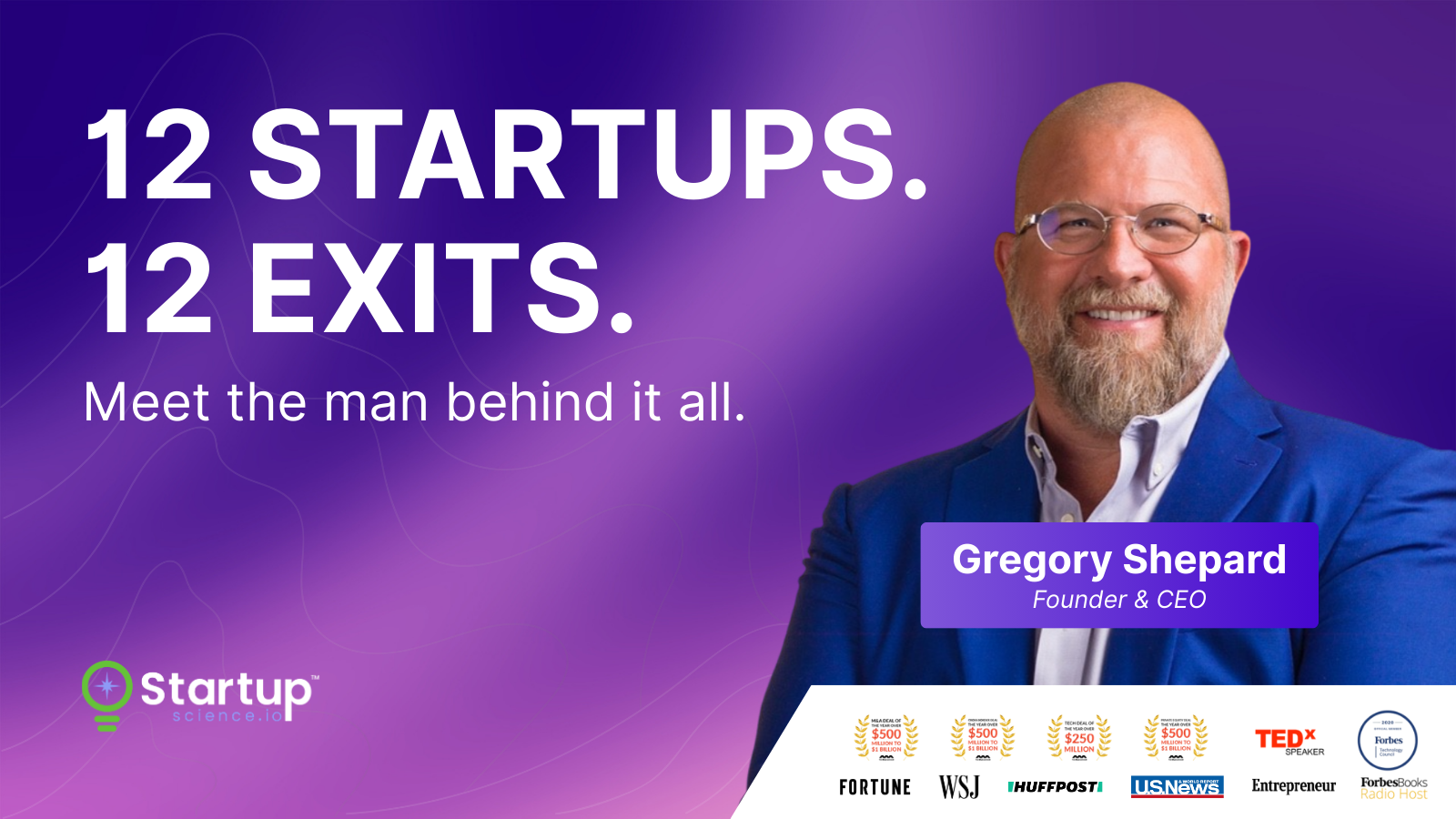
Gregory Shepard — Founder & CEO, Startup Science
- Serial entrepreneur with 12 startups, 12 exits
- Four private equity awards for transactions between $250M-$1B
- Author of The Startup Lifecycle (Ben Bella Publishing), with two additional books coming in 2026-2027
- Forbes podcast host, TEDx speaker, keynote presenter
- Co-founder of the Fulbright Entrepreneurship Initiative
- Background: Grew up in foster care in poverty, overcame significant health challenges early in life
- Personal Mission: Make entrepreneurship the ultimate path to equality, not a gatekeeping system
Jonathan Engle — Head of Marketing, Startup Science
- Startup founder and advisor
- Five years working with Gregory Shepard to build Startup Science
- Passionate about ecosystem unification and founder support
Chapter Breakdown with Timestamps
00:00-05:10 | Welcome & Context Setting
- Jonathan introduces the webinar and Startup Science's community funding campaign
- Sets ground rules for interaction and Q&A throughout the presentation
- Shares his personal story of meeting Gregory Shepard and being impressed by Greg's deep understanding of founder challenges
- Brief background on Startup Science's mission and traction to date
Key Message: This isn't just a pitch—it's an invitation to understand a decade-spanning vision for ecosystem transformation.
05:10-08:45 | Gregory's Background & Track Record
What Greg Covered:
- 12 startups, 12 exits over 35 years (started at teenage years)
- Four private equity awards for transactions valued between $250M-$1B
- Published author, podcast host, TEDx speaker, keynote presenter
- Co-founded Fulbright Entrepreneurship Initiative (partnership with academic institution to facilitate founder visas)
Why This Matters: Greg's credibility comes not from theory but from lived experience navigating the startup world at scale.
Key Quote: "I'm a serial entrepreneur. I'm trying to do something really special. I didn't realize that 12 exits was unusual until I started doing the research."
08:45-15:00 | The Problem: 90% Failure Rate & Conventional Wisdom
The Status Quo:
- 90% of founders fail
- This rate has remained unchanged for 35 years
- Yet the industry treats this as inevitable, not systemic
Conventional Explanations (That Miss the Point):
- 29% ran out of cash
- 14% ignored customers
- Various percentages attributed to team issues, business model problems, etc.
Greg's Key Insight: These aren't answers—they're questions in disguise. Why did they run out of cash? Why were they ignoring customers?
The Research Project:
- Five years of research starting in 2016
- $500,000 invested
- Five-person research team
- Interviews: 2,200 founders, 4,867 accelerator participants, 1,100 investors, 100 global companies
- Goal: Understand founder success and failure deeply enough to help others
15:00-25:00 | The Real Problem: Ecosystem Fragmentation
Five Core Ecosystem Players (Currently Disconnected):
- Founders (building the companies)
- ESOs/Accelerators (entrepreneur support organizations like accelerators, incubators, university programs)
- Service Providers (offering discounted tools, accounting, legal services, etc.)
- Mentors & Advisors (providing guidance and expertise)
- Investors (funding growth)
The Fragmentation Crisis:
- These five groups operate in complete isolation
- A founder might get advice from three mentors, two accelerator programs, and five service providers—all contradicting each other
- Investors evaluating the pitch have never spoken to any advisors
- No coordinated guidance, no shared data, no ecosystem-wide understanding of founder needs
The Missing Infrastructure:
- Other industries evolved from fragmentation to unified platforms (Amazon for shopping, Microsoft Office for productivity, Apple ecosystem)
- Startup ecosystem never made this transition—it remains trapped in 1995
- Founders navigate dozens of disconnected platforms, logins, and relationships with conflicting advice
Key Analogy: Trying to build a house where the architect, contractor, electrician, plumber, and inspector never communicate. Each gives different advice, works from different blueprints, and has no idea what the others are doing.
25:00-35:00 | The Solution: Cross-Pollination & Platform Strategy
The Core Insight: It's Not About Adding Another Tool
Instead of trying to fix individual failure points, build infrastructure that connects all five players simultaneously.
Cross-Pollination Strategy:
- Serve mentors → they bring their accelerator relationships
- Serve service providers → founders come for exclusive offers
- Provide operational tools for ESOs → automatic access to their founder applicants
- Entire networks enter the platform, not one user at a time
Capital Investment Approach:
- Most platforms spend money acquiring individual users
- Startup Science invests in operational tools for ESOs that they pay monthly fees to use
- Their founder applications automatically enter the platform
- Turns customer acquisition from an expense into a revenue stream while providing genuine value
The Startup Lifecycle Framework:Greg's research identified seven distinct phases where founders need different resources:
- Ideation — Validating business ideas
- Formation — Legal structure and team building
- Development — Building your product or service
- Validation — Testing market assumptions
- Launch — Going to market
- Growth — Scaling operations
- Exit — Acquisition or IPO
Without coordinated ecosystem support, founders piece together solutions from disconnected sources that often contradict each other across these phases.
35:00-46:00 | Business Model, Growth Strategy & Exit Vision
Current Traction:
- Over 100,000 founders on platform
- $5M+ invested through the system
- 300K+ raised in initial community funding round (with more coming)
Revenue Model:
- Multiple integrated revenue streams (not reliant on single source)
- Primary revenue from ESO operations (recurring monthly fees)
- Secondary revenue from service provider partnerships
- Investor network integration
- Direct-to-founder subscriptions
Growth Strategy:
- Goal: 2 million founders by acquisition target
- Multiplier effect through ecosystem consolidation
- Cross-pollination driving viral adoption loops
Exit Strategy & Multiples:
- Target exit: 3-5 years (originally 5, now pushing for 3)
- Expected valuation multiples: 5-10X standard market multiples
- Premium potential: 5X additional multiple if Startup Science reaches 10-20% of global startup ecosystem
- Strategic buyers: Any company seeking ecosystem data or founder networks (corporates innovating, new product development, etc.)
Key Quote (Greg on vision): "This is without question the greatest achievement that I will do and the greatest impact I will make on our little planet and all of us that live here and share it together."
46:00-52:00 | Q&A Session & Why Community Funding
Why Regulation Crowdfunding (Reg CF)?
Greg's Philosophy:"I want the startup ecosystem to be owned by everybody, not just owned by accredited and sophisticated investors."
The Problem with Traditional Funding:
- Non-accredited founders and supporters can't invest in private companies (regulated restriction)
- Traditional VC model excludes most of the ecosystem from equity upside
- Perpetuates wealth concentration in startup investing
The Community Funding Approach:
- Democratizes access to investment opportunity
- Allows founders, customers, mentors, service providers to own part of the ecosystem they're building
- Aligns incentives: everyone benefits from ecosystem success
- Raises capital from the ecosystem itself, not external VCs
Key Quote: "How can I make it so that everybody can participate in the fruits of the startup ecosystem and everybody help each other?"
Q&A Highlights
Q: When does the community funding round close?
A: Target closing: April 2026. Already raised $300K+ in initial weeks with more coming. (Greg and team are actively trying to fill the round quickly while keeping it open through April.)
Q: Why Reg CF instead of traditional VC?
A: Community ownership. Greg wants founders, customers, and ecosystem participants to own the company—not just accredited investors. This aligns incentives and democratizes access to startup ecosystem upside.
Key Resources
Learn More About Startup Science:
- Website: startupscience.io
- Community Funding Campaign: wefunder.com/startupscience
- Greg's Background & Work: gregoryshepard.com
- Blog: startupscience.io/blog
Get Involved:
- Invest in the Round: wefunder.com/startupscience
- Subscribe for Updates: Follow Startup Science on YouTube
Upcoming Webinars:
- TBA: Team webinar where you can hear directly from team members about their piece of the business
Books & Publications:
- The Startup Lifecycle (2024)
- Two additional books coming in 2026-2027
- Five-book series on execution, funding, and startup elements (forthcoming)
- Hundreds of articles on startup ecosystem topics (available via gregoryshepard.com)
Key Takeaways
- The Problem is Systemic, Not Individual. Founders don't fail because they lack capability—they fail because the ecosystem is fragmented and uncoordinated.
- Five Disconnected Players = Conflicting Advice. Founders bounce between mentors, accelerators, service providers, and investors with no shared understanding of success.
- Infrastructure Solves the Chicken-and-Egg Problem. By serving ESOs operationally, Startup Science acquires entire founder networks simultaneously, not one user at a time.
- Multiple Revenue Streams = Sustainability. Unlike platform companies with single revenue sources, Startup Science's integrated model can survive downturns and acquire competitors at scale.
- Community Ownership Aligns Incentives. Reg CF funding ensures everyone benefiting from ecosystem unification can own part of the solution.
- This is About More Than Startup Success. Entrepreneurship is the most democratic path to economic equality—fixing ecosystem infrastructure levels the playing field.
For Investors & Community Members
Investment Considerations:
- Serial entrepreneur with proven track record (12 exits)
- Substantial existing traction ($5M+ in founder investments through platform, $300K+ raised in community round)
- Multiple revenue streams reduce risk
- Large addressable market (startup ecosystem growing globally)
- Three-to-five year exit timeline targeting 5-10X standard multiples
Mission Alignment:
- Genuine belief in democratizing startup success
- Building infrastructure, not just another SaaS tool
- Community ownership structure aligns incentives
- Team genuinely passionate about ecosystem transformation (as evidenced by Jonathan's testimony)
Next Steps:
- Review community funding details at wefunder.com/startupscience
- Watch full recording on YouTube
About the Recording
This webinar was recorded on Riverside and is available in full on the Startup Science YouTube channel. Questions asked during the live session appear in the Q&A section above.
Share This: Know someone who should hear this? Share the recording, these notes, or the community funding link.